
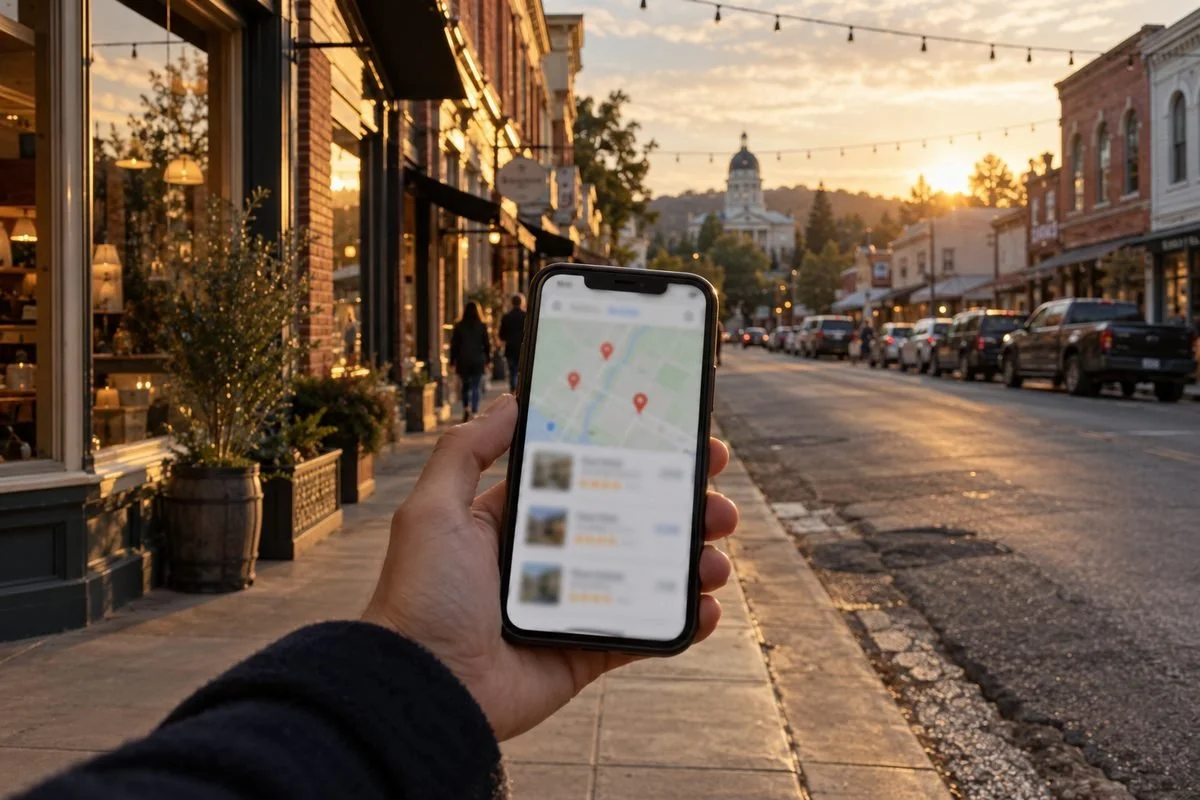
Three GBP cards above the links. Every firm in town wants one of the three.
Search for a lawyer with a city attached and Google answers with a map and three business cards before it shows a single website. Google calls those local results. Everyone else calls them the map pack.
For a law firm, the pack is the shortest distance between a person typing "divorce attorney" and a person dialing your office. It is also the part of Google that firms understand the least, so this post lays out what actually decides it.
What Google says decides it
Google publishes its own answer, and it is short. Local results are based primarily on relevance, distance, and prominence. Relevance is how well your profile matches what was typed. Distance is how far you are from the searcher or from the place they named. Prominence is how well known you are, measured partly by links, articles and directory listings across the web, and partly by your Google review count and rating.
Two more lines from that same page are worth memorizing. Complete and accurate profiles are more likely to show in local results. And there is no way to request or pay for a better local ranking. Anyone who tells your firm otherwise is selling something else.
What the people who study it say
Google will not publish the weights, so every year Whitespark surveys the local search specialists who test this for a living. The 2026 edition had 47 experts score 187 possible factors. The top five for the map pack, in order:
1. Your primary Business Profile category.
2. How close your address is to the searcher.
3. Keywords in your business name.
4. A physical address in the city being searched.
5. Being open at the time of the search.
Translated for a law firm: your primary category should be your main practice, so "Personal injury attorney" rather than the generic "Law firm", and your office needs to actually sit in the city you want to rank in. The next two items on that list need their own sections, because they trip up law firms more than any other kind of business.
The business name trap
Keywords in the business name rank third on that list, which is exactly why you should not touch yours. Google's guidelines say the profile name must be your real-world name as it appears on your sign, your website and your letterhead, and that adding unnecessary information can get the profile suspended. "Carter & Lee" does not become "Carter & Lee Car Accident Lawyers Roseville" because a ranking study said names matter.
Competitors who do that get reported, and when a spam listing comes down, the firms that played it straight move up. Reporting spam listings is itself on the ranking list, at number 19.
The same survey scored what hurts. AI-generated text on the profile, AI-generated photos, and keyword stuffing the description all made the new list of suspension risks. Write the profile like a person and fill it with real photos of your real office and your real team.
The hours problem
Being open at the time of the search is the fifth strongest signal. Google wants to show businesses that can take the call right now, which makes sense for a taqueria and much less sense for a law firm. A lot of people research lawyers at eleven at night, after something has gone wrong. The author of the Whitespark report makes the same point about lawyers. If your hours say nine to five, you are invisible to that person.
There is one clean fix and one bad one. The clean fix is a real answering service or intake line, with the profile hours extended to match what it covers. The bad one is listing hours you do not keep. Google's guidelines call that a violation, and a client who drives to a locked door leaves a one-star review, which costs you a signal that matters even more than hours.
Reviews are a fifth of the pack and rising
Review signals carry roughly a fifth of the map pack weight in the 2026 survey, and the author notes they gained weight again this year. The details matter more than the total. A high rating is sixth on the list. The number of Google reviews with written text is ninth. How recent the reviews are is eleventh, and a steady trickle over time beats a burst, which is fourteenth.
So a firm with 40 reviews that stopped arriving in 2023 is losing ground to a firm with 25 that gets two a month. Ask every client at the natural moment, usually when the matter closes, make it easy with a direct link, and never offer anything in exchange. Your state bar's advertising rules are stricter than Google's, and both prohibit buying reviews.

Most searches for a lawyer happen at night when your office is closed.
Your website is part of the pack
The profile does not rank alone. The page it links to carries weight. Your name, address and phone on the site matching the profile exactly is fifteenth on the list. Keywords in that page's title tag and headings are seventeenth and twentieth. A dedicated page for each service you offer, meaning each practice area, is twenty-fourth for the pack and the single strongest factor for the regular local results underneath it.
This is why a firm with a one-page site and a strong profile tends to stall. Google reads the site to confirm what the profile claims. Our Local Search & Reviews service covers the profile side, and practice pages are a big part of what a custom-built site is for.
A twenty-minute check
Open a private browser window and search your main practice area plus your city. Note who holds the three spots, and what their primary category, rating and review count are. Then open your own profile and check five things: the primary category, whether every field is filled, hours that match reality, your address and phone matching your website character for character, and the date of your most recent review.
Whatever is wrong is the list. If you would rather hand that list to someone, tap our shoulder. We will tell you where your firm sits in its own map pack and what moves it.
Frequently asked questions
-
It depends on how competitive the city is and how far behind the profile and website are. Category, hours and profile completeness can move rankings within weeks. Reviews and local links build over months, and a brand-new profile needs time to settle before Google trusts it.
-
No. Google states there is no way to request or pay for a better local ranking. Paid placement exists separately as Local Services Ads and search ads, which appear in their own labeled sections above the map.
-
An address in the city being searched is the fourth strongest map pack factor in the 2026 survey, so a real office in that city helps. A firm without a public office can run a service-area profile with the address hidden, but it still ranks from the location where the profile was verified.